
Skip to the end of the images gallery Navigation umschalten
Skip to the beginning of the images gallery Navigation umschalten
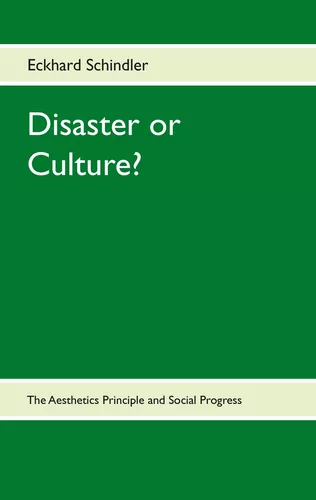
Disaster or Culture?
The Aesthetics Principle and Social Progress
Geistes-, Sozial- & Kulturwissenschaften
ePUB
922,2 KB
DRM: Wasserzeichen
ISBN-13: 9783739291192
Verlag: BoD - Books on Demand
Erscheinungsdatum: 25.06.2015
Sprache: Englisch
Barrierefreiheit: Eingeschränkt zugänglich
erhältlich als:
CHF 6.00
inkl. MwSt.
sofort verfügbar als Download
Du schreibst?
Erfüll dir deinen Traum, schreibe deine Geschichte und mach mit BoD ein Buch daraus!
Mehr InfosThis book deals with two areas, for which there is rarely a search for a common denominator: the human nervous system and the problems of civilisation. What are the performance features of the nervous system? How do these act together? How do modes of behaviour, emotions, cognitive achievements, artistic inclinations, the psyche and the self-conscious mind evolve from this? This subject is a controversial area and there are many attempts at interpreting the named phenomena from different fields. Eckhard Schindler adds another one. He directs attention to significant findings from neurosciences and applies the method of abstraction to this. The result is a hypothetical but consistent description of the system which could be concealed behind the nervous system.
In the other section of the book, the human failings of our time are subject to a critical analysis. In large parts of the world crime, violence and corruption prevail. A substantial part of technological achievements is aimed at being able to commit brutal acts of war. The natural environment and biodiversity are our livelihoods, but we are knowingly destroying this abundance. We are following the principles of accelerated consumption, economic growth and the increase in shareholder value towards disaster. We have efficient technologies and industries and allow people to starve. It can also hardly be denied that the human being is equipped with a pronounced propensity towards destructive modes of behaviour. Great cultural achievements are at any moment undermined by disaster.
Analysis of this dark side of civilisation is followed by the search for solutions. The idea of a largely peaceful, fair and systematic (sustainable) management of global cultural society appears to be a utopia considering the geopolitical realities. Eckhard Schindler contrasts this resigned perception with practical problem-solving approaches. The principles of the system behind the nervous system here act as a starting point.
In the other section of the book, the human failings of our time are subject to a critical analysis. In large parts of the world crime, violence and corruption prevail. A substantial part of technological achievements is aimed at being able to commit brutal acts of war. The natural environment and biodiversity are our livelihoods, but we are knowingly destroying this abundance. We are following the principles of accelerated consumption, economic growth and the increase in shareholder value towards disaster. We have efficient technologies and industries and allow people to starve. It can also hardly be denied that the human being is equipped with a pronounced propensity towards destructive modes of behaviour. Great cultural achievements are at any moment undermined by disaster.
Analysis of this dark side of civilisation is followed by the search for solutions. The idea of a largely peaceful, fair and systematic (sustainable) management of global cultural society appears to be a utopia considering the geopolitical realities. Eckhard Schindler contrasts this resigned perception with practical problem-solving approaches. The principles of the system behind the nervous system here act as a starting point.

Eigene Bewertung schreiben



Es sind momentan noch keine Pressestimmen vorhanden.