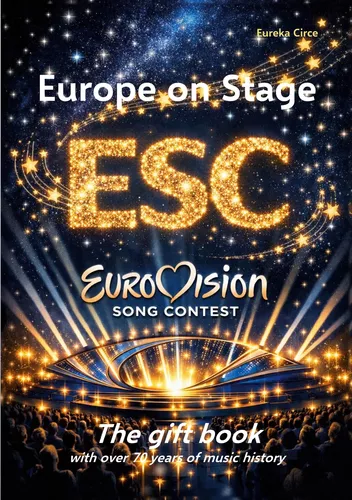
What do ABBA, Conchita Wurst, Lordi, Lena, Jamala, Udo Jürgens, and Nemo have in common? Not only did they all win the Eurovision Song Contest - they changed it. The Eurovision Song Contest is much more than an annual music competition. It is a stage, a seismograph, and a playground for European pop culture: glamorous and embarrassing, political and playful, serious and camp at the same time. This gift book discusses the ESC as a cultural event - as a pop phenomenon full of desire, exaggeration, and productive contradictions. After an overview of the history, dramaturgy, and myth of the Eurovision Song Contest, the focus shifts to around 30 selected winners from almost seven decades of ESC history. The selection does not follow a rigid canon, but rather a curatorial perspective: international impact and lasting success, iconic performances, social relevance, aesthetic breaks, scandals, innovations - and those moments when Europe held its breath for three minutes. From early classics such as "Volare" and "Merci, Chérie" to pop explosions à la ABBA and Lena, from queer milestones to politically charged victories in the shadow of war and solidarity, from ironic trash to quiet counter-designs: each story shows how closely music, media, and zeitgeist are interwoven at the ESC. The result is a panorama of European pop history - entertaining and knowledgeably told, with a keen sense of camp, drama, and meaning. A book for ESC fans, pop culture enthusiasts, and anyone who wants to know why this competition has been around for more than 70 years - and why it keeps reinventing what Europe can be on stage: Europe On Stage - The ESC Gift Book. From the appendix: ABBA | Alexander Rybak | Bucks Fizz | Céline Dion | Conchita Wurst | Dana International | Domenico Modugno | Flo Rida | Hatari | Jamala | JJ | Johnny Logan | Kalush Orchestra | Lena | Loreen | Lordi | Måneskin | Nemo | Netta | Nicole | Rodolfo Chikilicuatre | Ruslana | Salvador Sobral | Sandie Shaw | Stefan Raab | Subwoolfer | Udo Jürgens | Verka Serduchka | Vicky Leandros | WRS.
Eureka Circe is the editor and curator of various book series on personal development, naturopathy, and theology (YouTube, among others: Eureka2Theo) - including queer theology and Christology. Her thesis: "Artificial intelligence (AI) represents a profound turning point because it fundamentally changes the relationship between humans, knowledge, and access to the world - not only technically, but also culturally, epistemologically, and socially. It opens up new access to knowledge and leads to its multiplication and democratization: AI systems make information readily available - often without the need for traditional reading or in-depth prior knowledge. This fundamentally changes how we think, learn, and understand, while also promoting a new form of individualized thinking - which can also be exemplified in spiritual belief. What's more, machines now generate meaning - texts, images, arguments - where previously only human expertise was required. This has long-term consequences for education, science, politics, and religion."








Es sind momentan noch keine Pressestimmen vorhanden.