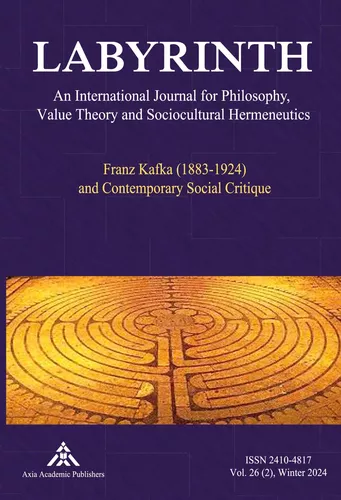
Although Kafka's literary works do not contain the explicit social criticism found in the works of authors like George Orwell and Ray Bradbury, his novels are seen as both a product of and a critique of modernity. As such, they have had a lasting influence on many writers and intellectuals. Therefore, it is no coincidence that many contemporary philosophers have reflected on his work, including Sartre, Camus, Adorno, Arendt, Benjamin, Barthes, Derrida, Deleuze, Guattari, and Agamben. Kafka's novels were perceived as implicitly criticizing the totalitarian system, so they were not translated, were ignored, and were even partially banned in Eastern Europe. This volume, dedicated to the 100th anniversary of Franz Kafka's death, discusses the various ways his work was received, as well as its critical impact and relevance.
Yvanka B. Raynova, D.Sc., Ph.D., Dr.Phil., is a full professor of contemporary philosophy and head of the Department of History of Philosophical and Scientific Ideas at the Institute of Philosophy and Sociology of the Bulgarian Academy of Sciences, as well as director of the Institute for Axiological Research in Vienna. Her research and teaching focus on phenomenology, hermeneutics, axiology, the philosophy of religion, feminist philosophy, intercultural communication, and translation studies.









Es sind momentan noch keine Pressestimmen vorhanden.