
Skip to the end of the images gallery Navigation umschalten
Skip to the beginning of the images gallery Navigation umschalten
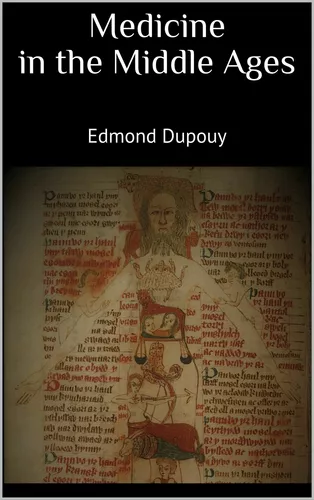
Medicine in the Middle Ages
Geistes-, Sozial- & Kulturwissenschaften
ePUB
528,3 KB
DRM: Wasserzeichen
ISBN-13: 9783751954600
Verlag: Books on Demand
Erscheinungsdatum: 10.12.2020
Sprache: Englisch
Barrierefreiheit: Eingeschränkt zugänglich
CHF 3.00
inkl. MwSt.
sofort verfügbar als Download
Du schreibst?
Erfüll dir deinen Traum, schreibe deine Geschichte und mach mit BoD ein Buch daraus!
Mehr InfosIn the fourth century of the Christian era Roman civilization expired; Western Europe was invaded by the barbarians; letters and science sought a last refuge at Alexandria; the Middle Age commenced.
Greek medicine strove to survive the revolution in the city of the Ptolemies, and even produced a few celebrated physicians, i.e. , Alexander Ætius, Alexander Trallian, and Paulus Ægineta, but at the end of the seventh century the school of Alexandria also fell and disappeared in the clouds of a false philosophy, bequeathing all Hippocratic traditions to the Arabs, who advanced as conquerors to the Occident.
The Arabian schools of Dschondisabur, Bagdad, Damascus, and Cordova were founded and became flourishing institutions of learning, thanks to a few Nestorian Greeks and Jews who were attracted to these centers of learning; such men as Aaron, Rhazes, Haly-Abas, Avicenna, Avenzoar, Averrhoes, Albucasis, and other writers, who continued the work left by the Greeks, leaving remarkable books on medicine and surgery. Unfortunately the ordinance of Islamism prevented these scientists from following anatomical work too closely, and consequently limited the progress they might otherwise have made in medicine.
Greek medicine strove to survive the revolution in the city of the Ptolemies, and even produced a few celebrated physicians, i.e. , Alexander Ætius, Alexander Trallian, and Paulus Ægineta, but at the end of the seventh century the school of Alexandria also fell and disappeared in the clouds of a false philosophy, bequeathing all Hippocratic traditions to the Arabs, who advanced as conquerors to the Occident.
The Arabian schools of Dschondisabur, Bagdad, Damascus, and Cordova were founded and became flourishing institutions of learning, thanks to a few Nestorian Greeks and Jews who were attracted to these centers of learning; such men as Aaron, Rhazes, Haly-Abas, Avicenna, Avenzoar, Averrhoes, Albucasis, and other writers, who continued the work left by the Greeks, leaving remarkable books on medicine and surgery. Unfortunately the ordinance of Islamism prevented these scientists from following anatomical work too closely, and consequently limited the progress they might otherwise have made in medicine.

Eigene Bewertung schreiben



Es sind momentan noch keine Pressestimmen vorhanden.