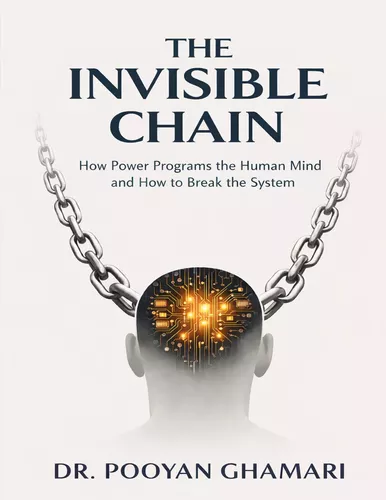
The Invisible Chain is a nonfiction book about how power shapes human reality through narrative, debt, media, institutions, surveillance systems, digital platforms, and algorithmic control. It traces the evolution of organized power from early civilizations to contemporary systems of behavioral prediction, showing how modern control operates not only through force but through the design of perception, identity, and possibility itself.
This revised and updated 2026 edition expands the original 2021 work with new analysis of AI deployment, sanctions regimes, geopolitical instability, narrative warfare, and the architecture of synthetic reality. The book examines what these systems do to attention, trust, memory, dignity, and freedom, and asks what kinds of sovereignty remain possible in a world increasingly shaped by predictive systems and managed dependence.
Combining political analysis, media critique, social philosophy, and technological reflection, The Invisible Chain is written for readers interested in power, systems, digital society, modern governance, and the future of human autonomy. The final chapters move beyond diagnosis toward reconstruction, outlining what sovereign minds, sovereign communities, and sovereign institutions might look like in practice.
Dr. Pooyan Ghamari is a Swiss economist and author whose work focuses on power, institutions, media, technology, sovereignty, and the structures that shape modern human life. His writing explores how systems of control are built through narrative, finance, administration, and digital architecture, and how individuals and societies can recover clarity, dignity, and strategic autonomy in an age of surveillance, dependency, and algorithmic influence.
In The Invisible Chain, he brings together historical analysis, social theory, media critique, and geopolitical reflection to examine how reality itself is designed and managed. His work is written for readers who want to understand not only the visible systems of modern power, but also the deeper frameworks that govern perception, belief, and consent.









Es sind momentan noch keine Pressestimmen vorhanden.